
Pambuka
Lapisan keju penting kanggo njaga kesegeran produk, nglindhungi saka kontaminasi, lan nyedhiyakake penanganan sing gampang. Kualitas bungkus iki langsung ana gandhengane karo sifat mekaniké, utamané kekiatan lentur, sing njamin yèn bahan bisa tahan bolak-balik dibengkokaké lan dilipat nalika dikemas, dikirim, lan digunakaké déning konsumen. Nglakokaké Tes Fleksibel Gelbo ngidini pabrikan lan profesional kontrol kualitas kanggo ngevaluasi kinerja bungkus keju ing kahanan sing distandarisasi, miturut ASTM F392 Pedoman. Uji iki penting banget kanggo ndeteksi kegagalan awal, ngoptimalake pilihan bahan, lan njamin yen pembungkus tetep nduweni sifat penghalang marang lembab lan gas.
Ngerti Tes Gelbo Flex
Ing Tes Fleksibel Gelbo dirancang kanggo ngukur tahanane bahan fleksibel, kaya bungkus keju, marang kelenturan bola-bali. Nalika dites, sampel ngalami puteran lan gerakan horisontal kanthi frekuensi 45 siklus saben menit. Iki nyimulasikake kahanan penanganan ing donya nyata ing ngendi bahan dilipat, diremuk, utawa diputer bola-bali. Uji iki mbantu nemtokake apa bungkusan kasebut ngalami bolongan cilik, retakan, utawa nyuda sifat penghalang sawise bola-bali ditekuk. Tingkat panyiapan sing beda, saka A nganti E, nyimulasikake tingkat stres sing maneka warna, supaya pabrikan bisa ngevaluasi kinerja bahan ing kahanan penanganan jangka cendhak utawa jangka panjang.
Pengukuran Ketahanan Fleksibel
Ketahanan lentur iku metrik kunci kanggo bungkus keju amarga bolak-balik dilipat bisa ngurangi integritas kemasan. The Tes Fleksibel Gelbo Ngukur daya tahan iki kanthi nyathet jumlah siklus nganti gagal utawa kelemahan sing signifikan kedadeyan. Tingkat kondisioning kalebu:
- Kahanan A: Flex lengkap sajrone 1 jam (2700 siklus)
- Kahanan B: Fleksibel penuh sajrone 20 menit (900 siklus)
- Kahanan C: Fleksibel penuh sajrone 6 menit (270 siklus)
- Kahanan D: Fleksibel penuh kanggo 20 siklus
- Kahanan E: Fleksi parsial kanggo 20 siklus
Data saka tes-tes iki mbantu nemtokake bahan bungkus sing cocog kanggo aplikasi tartamtu, kayata panyimpenan jangka panjang, jalur kemasan cepet, utawa panggunaan konsumen.
Ngevaluasi Sifat Barrier Sawisé Melengkung
Saliyane ketahanan mekanis, Tes Fleksibel Gelbo mènèhi panilaian babagan efek lenturan marang sipat-sipat penghalang kaya tingkat transmisi gas lan kelembapan. Bungkus keju kudu njaga kinerja barier supaya ora bosok. Tingkat kondisioning D lan E biasane digunakake kanggo mriksa owah-owahan kinerja barier sawise lentur entheng utawa parsial, dene tingkat A, B, lan C nyimulasikake kahanan penanganan sing ketat. Iki njamin yen bungkus tetep njaga fungsi proteksine sajrone siklus uripe.
Pentingé ASTM F392
ASTM F392 Nyedhiyakake metodologi standar kanggo tes Gelbo Flex, njamin asil bisa dibandhingake ing laboratorium lan fasilitas produksi. Kanthi netepi standar iki, pabrikan bisa kanthi yakin ngevaluasi tahanan lentur, ndeteksi kabentuké bolongan cilik, lan nggawe keputusan sing tepat babagan pilihan bahan. Standar iki uga nuntun praktik keamanan, penanganan, lan lingkungan, njamin patuh marang peraturan global.
Piranti sing disaranake kanggo tes Gelbo Flex
Kanggo nguji bungkus keju kanthi tepat lan andal, Cell Instruments Gelbo Flex Tester GFT-01 disaranake. Piranti iki nindakake siklus lentur kanthi akurat ing kahanan sing dikontrol, nyimulasikake skenario penanganan ing donya nyata. Piranti iki nyedhiyakake wawasan rinci babagan ketahanan lentur lan kinerja penghalang, ngidini tim kontrol kualitas ngawasi konsistensi bahan lan ngoptimalake solusi kemasan. GFT-01 ndhukung kabeh tingkat kondisioning sing ditemtokake ing ASTM F392, saéngga dadi piranti penting kanggo laboratorium produksi lan riset.
Kesimpulan
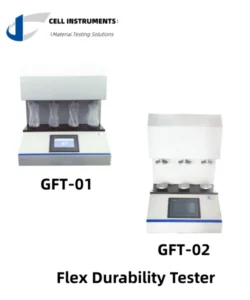
Sakabèhémaria, sang Tes Fleksibel Gelbo penting kanggo ngevaluasi kekiatan lentur lan integritas barier Lapisan keju. Kanthi nyimulasikake gerakan muter lan ngremuk bola-bali, pabrikan bisa ndeteksi kelemahan bahan, ngoptimalake desain kemasan, lan njamin perlindungan produk. Uji standar sing ditindakake sabanjure ASTM F392, digabung karo piranti sing bisa dipercaya kaya Cell Instruments GFT-01 lan GFT-02, ngidini kontrol kualitas sing konsisten, nambah keamanan konsumen, lan ndhukung inovasi bahan ing kemasan fleksibel.
Pitakonan
Q1: Napa ketahanan lentur iku penting kanggo bungkusan keju?
Ketahanan fleksibel njamin bungkusan bisa tahan penanganan bola-bali tanpa ngasilake bolongan cilik utawa kelangan sifat penghalang, sing penting kanggo nglindhungi produk.
Q2: Tes Gelbo Flex ngukur apa?
Iki ngukur tahanane bahan kemasan fleksibel marang kelenturan bola-bali lan nemtokake pengaruhe marang sifat penghalang lan mekanik.
Q3: Kepiye GFT-01 nambah akurasi tes?
Cell Instruments GFT-01 nindakake siklus lentur sing distandarisasi kanthi kontrol presisi marang kacepetan lan gerakan, nyedhiyakake asil sing bisa diulang lan bisa dipercaya.
 Basa Jawa
  English
  Afrikaans
  አማርኛ
አማርኛ  العربية
  العربية المغربية
  অসমীয়া
  Azərbaycan dili
  Беларуская мова
  Български
  Bosanski
  Català
  Cebuano
  Čeština
  Cymraeg
  Dansk
Dansk  Deutsch
  རྫོང་ཁ
  Ελληνικά
  Español
  Euskara
  فارسی
فارسی  Suomi
Suomi  Français
  Friulian
  ગુજરાતી
  עִבְרִית
  हिन्दी
  Hrvatski
  Magyar
  Հայերեն
  Bahasa Indonesia
  Íslenska
  Italiano
  日本語
日本語  ქართული
  Taqbaylit
  Қазақ тілі
  ភាសាខ្មែរ
  한국어
한국어  ພາສາລາວ
  Lietuvių kalba
  Latviešu valoda
  Македонски јазик
  മലയാളം
  ဗမာစာ
ဗမာစာ  Norsk bokmål
  नेपाली
  Nederlands
  Polski
  Português
  Română
  Русский
  Сахалыы
  Slovenčina
  Slovenščina
  Shqip
Shqip  Српски језик
  Svenska
  Ślōnskŏ gŏdka
  தமிழ்
தமிழ்  తెలుగు
  ไทย
ไทย  Türkçe
  Українська
  O‘zbekcha
  Tiếng Việt
  繁體中文
繁體中文  香港中文
香港中文