
Embalagens flexíveis de alta barreira Testes Gelbo Flex
As embalagens flexíveis de alta barreira desempenham um papel fundamental nos sistemas de embalagem modernos, onde proteção contra o oxigénio, a humidade, a luz e a perda de aroma determinam diretamente o prazo de validade e a segurança do produto. Desde alimentos e produtos farmacêuticos até dispositivos médicos e produtos químicos de uso diário, as embalagens flexíveis de alta barreira combinam películas multicamadas, revestimentos e laminações para proporcionar avançadas propriedades de barreira mantendo, ao mesmo tempo, a flexibilidade e a eficiência em termos de custos.
No entanto, o desempenho da barreira não depende exclusivamente da escolha do material. Durante o enchimento, a manuseamento, o transporte e a utilização pelo consumidor, as embalagens são submetidas a repetidas flexões, torções e compressões. Estas tensões podem causar microfissuras ou orifícios minúsculos, reduzindo significativamente a eficácia da barreira. Compreender como avaliar e controlar estes riscos continua a ser essencial para o controlo de qualidade e o desenvolvimento de embalagens.
Ensaios de flexibilidade do Gelbo e avaliação das propriedades de barreira
A norma ASTM F392 define um método normalizado Testes de flexibilidade do Gelbo prática destinada a preparar os materiais de embalagem flexíveis antes de avaliar a sua propriedades de barreira e desempenho mecânico. Em vez de medir diretamente a transmissão de gás ou humidade, a norma ASTM F392 centra-se em condicionamento de flexibilidade controlada, que simula a tensão mecânica existente no mundo real.
Esta abordagem ajuda os profissionais da área das embalagens a responder a uma questão fundamental:
Em que medida é que as embalagens flexíveis de alta barreira mantêm as suas propriedades de barreira após flexões repetidas?
Ao associar o ensaio de flexibilidade a ensaios de barreira subsequentes — tais como a taxa de transmissão de oxigénio (OTR) ou a taxa de transmissão de vapor de água (WVTR) —, a norma ASTM F392 reforça a confiança na durabilidade das embalagens.
Por que razão a resistência à flexão é importante nas embalagens flexíveis de alta barreira
As embalagens flexíveis de alta barreira utilizam frequentemente camadas funcionais finas, tais como folha de alumínio, películas metalizadas ou EVOH. Estas camadas proporcionam um excelente desempenho de barreira, mas continuam a ser sensível a danos mecânicos.
Os suportes para ensaios de resistência à flexão:
-
Identificação de falhas por orifícios minúsculos causadas pela deformação por flexão
-
Comparação de estruturas e laminações alternativas de película
-
Otimização da seleção de materiais para ambientes de distribuição exigentes
Sem um condicionamento de flexibilidade, os ensaios de barreira podem sobrestimar o desempenho em condições reais. A norma ASTM F392 colmata esta lacuna ao introduzir uma tensão mecânica realista antes da avaliação.
Como o Gelbo Flex Conditioning simula a utilização real
A Gelbo Flex Testing aplica um movimento repetitivo de torção e compressão para filmar amostras em condições atmosféricas normais. Este movimento reflete as tensões a que as amostras são submetidas durante as operações de embalagem e logística.
Os aspetos fundamentais do processo de flexão incluem:
-
Uma frequência controlada de aproximadamente 45 ciclos por minuto
-
Torções repetidas seguidas de um movimento horizontal
-
Distribuição uniforme da tensão ao longo da amostra de ensaio
O número e a gravidade dos ciclos variam consoante a estrutura da embalagem e o objetivo de desempenho da avaliação.
Integração da norma ASTM F392 com ensaios de barreira e mecânicos
A norma ASTM F392 funciona como uma etapa de pré-condicionamento, não se trata de um teste de desempenho isolado. Após o teste de flexão, os laboratórios realizam normalmente avaliações adicionais, incluindo:
-
Ensaio da taxa de transmissão de oxigénio
-
Ensaios à taxa de transmissão de vapor de água
-
Ensaios de resistência à tração ou ao rasgo
Ao comparar amostras flexionadas com amostras de controlo não flexionadas, qqualidade tAs equipas podem quantificar o impacto da flexão no desempenho e identificar limites aceitáveis para embalagens flexíveis de alta barreira.
Apoio aos ensaios segundo a norma ASTM F392 com o equipamento adequado
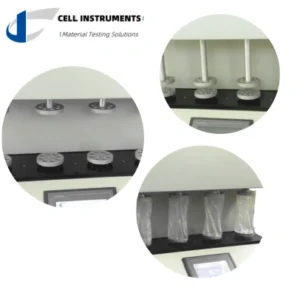
Para uma hidratação eficaz com Gelbo Flex, é necessário controlo de movimento estável e ciclos repetíveis. Os Instrumentos Cell GFT-01 Testador de flexibilidade Gelbo está em conformidade com a norma ASTM F392, proporcionando uma ação de flexão controlada e uma execução consistente dos ciclos, ajudando os laboratórios a manter condições de ensaio reprodutíveis.
Quando combinado com instrumentos de ensaio de barreira, o GFT-01 permite aos engenheiros de embalagem avaliar o desempenho das escolhas de materiais e dos projetos estruturais sob tensões mecânicas realistas.

Conclusão
As embalagens flexíveis de alta barreira proporcionam uma proteção excecional, mas o seu desempenho depende da sua capacidade de resistir à flexão repetida ao longo do seu ciclo de vida. A norma ASTM F392 e o ensaio Gelbo Flex oferecem uma forma prática e normalizada de condicionar os materiais antes da avaliação propriedades de barreira e durabilidade.
Ao integrar a norma ASTM F392 nos programas de validação de embalagens e ao utilizar equipamento fiável, como o GFT-01 da Cell Instruments, os fabricantes e os profissionais da qualidade podem conceber embalagens flexíveis de alta barreira mais resistentes e fiáveis, que funcionam conforme previsto, desde a produção até à utilização final.
 Português
  English
  Afrikaans
  አማርኛ
አማርኛ  العربية
  العربية المغربية
  অসমীয়া
  Azərbaycan dili
  Беларуская мова
  Български
  Bosanski
  Català
  Cebuano
  Čeština
  Cymraeg
  Dansk
Dansk  Deutsch
  རྫོང་ཁ
  Ελληνικά
  Español
  Euskara
  فارسی
فارسی  Suomi
Suomi  Français
  Friulian
  ગુજરાતી
  עִבְרִית
  हिन्दी
  Hrvatski
  Magyar
  Հայերեն
  Bahasa Indonesia
  Íslenska
  Italiano
  日本語
日本語  Basa Jawa
  ქართული
  Taqbaylit
  Қазақ тілі
  ភាសាខ្មែរ
  한국어
한국어  ພາສາລາວ
  Lietuvių kalba
  Latviešu valoda
  Македонски јазик
  മലയാളം
  ဗမာစာ
ဗမာစာ  Norsk bokmål
  नेपाली
  Nederlands
  Polski
  Română
  Русский
  Сахалыы
  Slovenčina
  Slovenščina
  Shqip
Shqip  Српски језик
  Svenska
  Ślōnskŏ gŏdka
  தமிழ்
தமிழ்  తెలుగు
  ไทย
ไทย  Türkçe
  Українська
  O‘zbekcha
  Tiếng Việt
  繁體中文
繁體中文  香港中文
香港中文